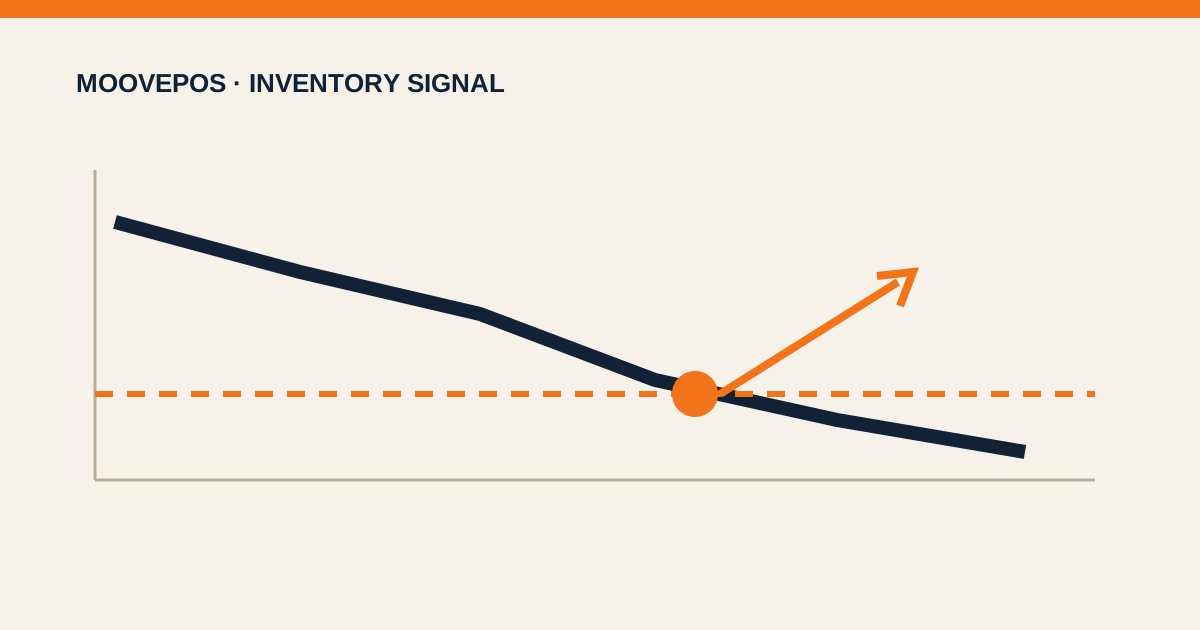
Minimum stock is not one number for every item. Fast sellers from slow suppliers need more buffer than seasonal goods that can arrive tomorrow. Replenishment should therefore follow demand patterns and actual lead time.
Use a simple formula as a starting point
A reorder point can start with average daily sales multiplied by lead time, plus safety stock. If an item sells 8 units a day, takes 4 days to arrive, and needs a 10-unit buffer, the initial reorder point is 42 units. Review it whenever sales patterns or lead times change.
Group items by operational risk
- Prioritize high-revenue items with costly stockout risk.
- Separate seasonal items from regular demand patterns.
- Use actual lead time, not the supplier's best promise.
- Review slow movers so safety stock does not become dead stock.
- Log stockout events to improve the next parameter review.
A reorder point supports a decision; it is not autopilot. Promotions, holidays, price changes, and storage capacity still require judgment.
Ready to Run a Cleaner Outlet Operation?
Try MoovePOS for 14 days. Connect transactions, inventory, customers, teams, and reports while keeping checkout available during connection issues.